Quartz Sink vs Stainless Steel Sink: Differences, Pros & Cons and Buying Guide
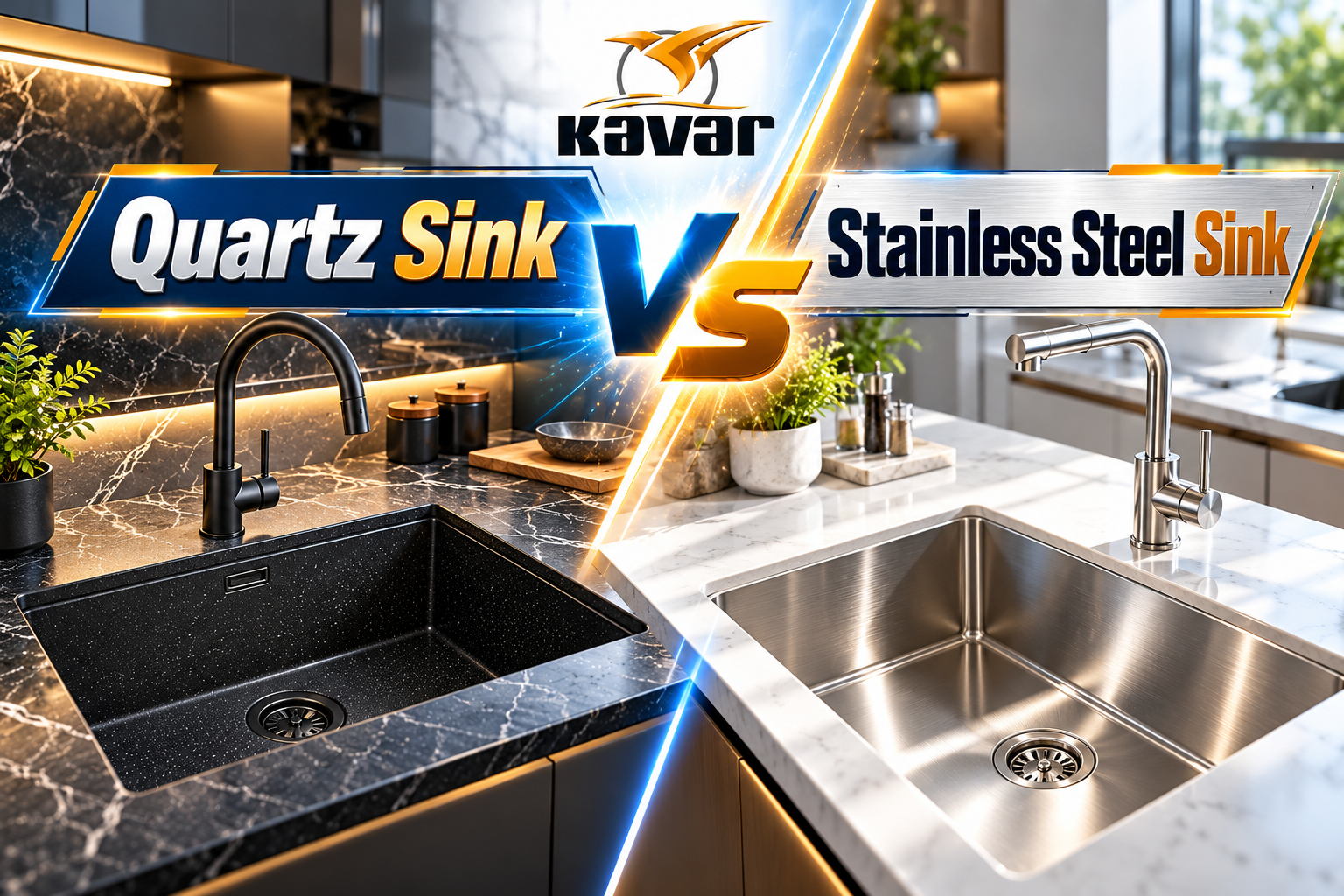
Choosing Between Quartz and Stainless Steel Sinks?
A kitchen sink gets used every day, so the right choice should match your utensils, water quality, countertop and cleaning routine. Quartz Sink vs Stainless Steel Sink is not simply a comparison of looks. This KavarIndia guide breaks down the materials, pros and cons and the practical details worth checking before you buy.
- Quartz: mineral-filled composite with a resin binder
- Stainless steel: metal sink; ask for the specified grade
- Compare real bowl dimensions and mounting styles
- Review heat and abrasion care instructions
- Look for sound-damping details on steel sinks
- Check drain, faucet and countertop compatibility
Table of Contents
Quartz Sink vs Stainless Steel Sink is a common kitchen planning question, especially when you want a sink that looks good but also survives wet vessels, heavy pans and daily washing. Neither material wins every category. A quartz composite bowl can give a solid-colour, subdued look; stainless steel is familiar, flexible and usually easy to match with other fittings.
Quick answer: Pick stainless steel if straightforward cleaning, tolerance of everyday metal utensils and material flexibility matter most. Consider quartz composite if a quieter-feeling, matte or coloured sink is a priority. Compare the actual manufacturer's care guidance, size, steel grade or composite formulation before deciding.
What Is a Quartz Sink vs a Stainless Steel Sink?
A quartz kitchen sink usually means a manufactured composite made from quartz or other mineral particles held together by polymer resin. It is not the same thing as a sink carved from a single piece of natural quartz. Different mineral-to-resin formulations produce different colours, textures and care requirements.
A stainless steel kitchen sink is formed or fabricated from corrosion-resistant alloy sheet. For many kitchen applications, buyers consider grades such as SS 304; other grades, including 202 and 316, exist but have different compositions and suitability. Steel thickness, construction, weld quality and surface finish also affect performance.
Sticky Q&A: Which sink material should you choose?
Answer: For a busy kitchen with frequent vessel washing, stainless steel is often the straightforward option. For a coordinated colour scheme and less metallic sound, consider quartz composite. In either case, first confirm the usable bowl dimensions, mounting method, installation fit and cleaning instructions.
Where Does Each Kitchen Sink Work Best?
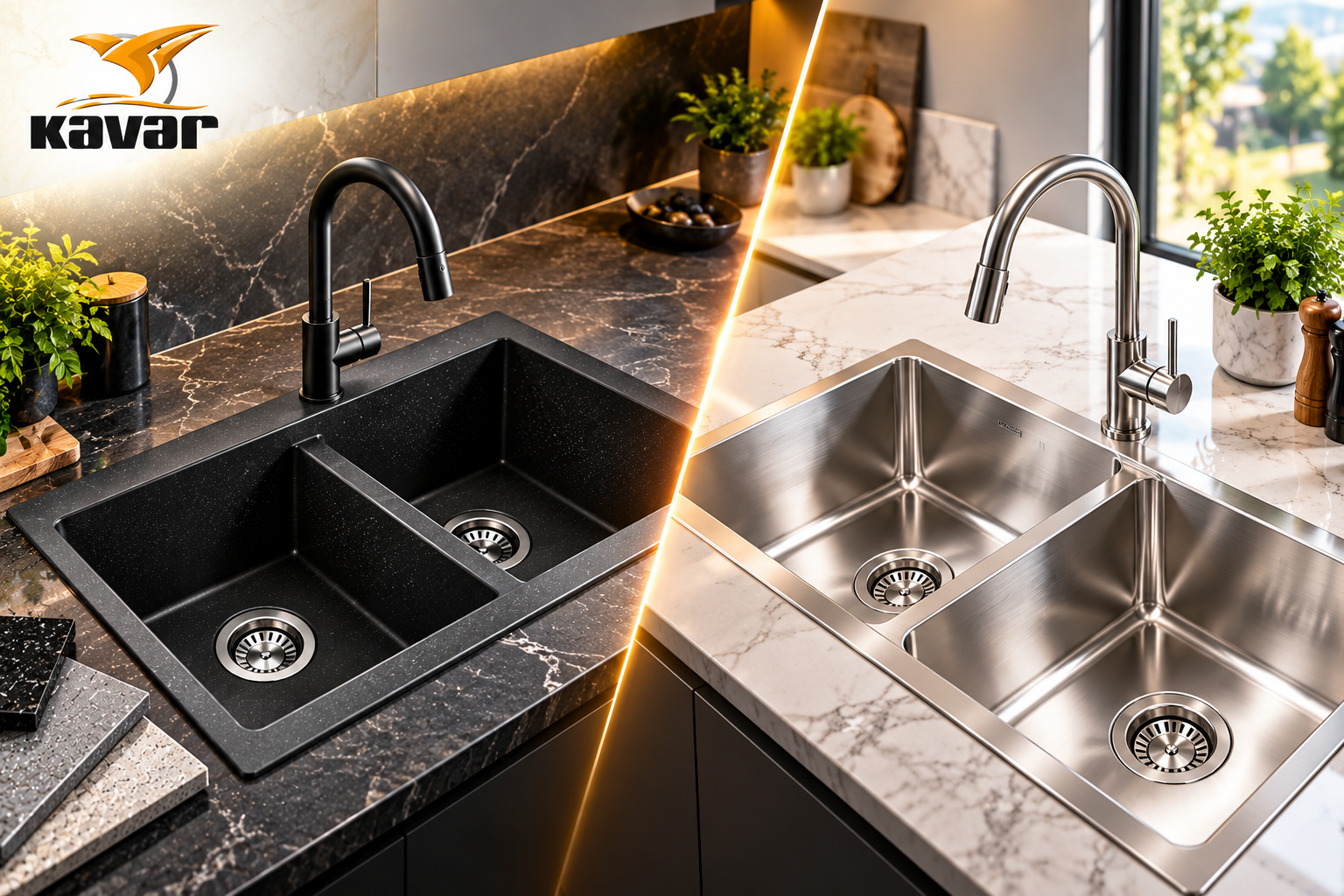
Think about how the sink will actually be used, rather than shopping by appearance alone:
- Busy family kitchens: stainless steel works well for regular pot and plate washing; select a deep enough bowl and sensible corner radius.
- Modern modular kitchens: quartz composite can complement dark, beige or stone-effect countertops when colour coordination is important.
- Compact apartments: a well-sized single-bowl sink may give more useful washing space than a cramped double bowl, whichever material you choose.
- Heavy cooking routines: check large kadai or pressure-cooker clearance, drain position and how safely hot vessels can be handled.
One thing buyers often discover late: the outside sink size is not the usable bowl size. A large rim or thick wall can reduce the space available for washing wide utensils. Ask for internal bowl length, width and depth.
Quartz Sink vs Stainless Steel Sink: Key Differences
This comparison describes typical material behaviour, not the performance of every model. Finish, thickness, composition, accessories and care instructions can change the result.
1. Scratches, Chips and Daily Impact
Stainless steel may develop fine surface scratches through normal use, particularly on glossy finishes; brushing can make them less conspicuous. Quartz composite generally resists routine abrasion, but hard impacts may chip an edge and rough pans or abrasive cleaners may leave marks. Neither is genuinely scratch-proof.
2. Heat Resistance and Hot Cookware
Stainless steel itself tolerates high temperatures, although sudden temperature changes and attached components still deserve care. Quartz composite heat tolerance depends on its resin binder and design. Do not rest a pan straight from a hot burner inside a composite sink unless the product's guidance explicitly allows it.
3. Water Stains, Hygiene and Cleaning
Both materials can be hygienic when cleaned correctly. Steel has a non-porous metal surface and usually needs mild detergent, rinsing and drying to manage water spots. Quartz composite is also designed for kitchen use, but hard-water mineral deposits and stains can stand out, particularly on dark colours. Follow the manufacturer's cleaner recommendations and avoid harsh abrasives.
4. Noise and Everyday Feel
A dense quartz composite bowl often gives a quieter, less metallic sound when water or cutlery hits it. Stainless steel noise depends substantially on sheet thickness and the presence of pads or undercoating. If sound matters, compare finished sink models, not raw materials alone.
5. Finish, Installation and Cost
Steel is commonly available in satin or brushed finishes; quartz composite offers a wider range of solid colours. Both can be made for top-mount or undermount configurations, but compatibility is model-specific. Compare installed costs including cut-out, mounting hardware, waste coupling, faucet holes and possible countertop modification. Quartz composite is not always more expensive, and steel is not always the budget option.
KavarIndia: A Practical Kitchen Sink Selection Perspective
When comparing a quartz composite sink and a stainless steel sink, KavarIndia buyers should focus on the exact model rather than broad material claims. Ask for dimensions, material specification, finish, drain requirements, available accessories and the written care instructions for the sink being quoted.
Illustrative technical-team-style selection guidance (not a verified quotation): “We would check the biggest utensils a family washes and the space below the countertop before comparing finishes. A lovely-looking sink is frustrating if the pressure cooker does not sit comfortably in the bowl.” This is selection advice, not a claim about independent product testing.
- Material: verify SS grade or the composite material description for the actual model.
- Dimensions: record outer size, inner bowl dimensions, depth and cabinet clearance.
- Accessories: confirm strainer, waste coupling, overflow and faucet-hole requirements.
- Service and care: request installation guidance, cleaning recommendations and the model-specific terms offered by the seller.
How to Choose a Quartz or Stainless Steel Kitchen Sink
Use this checklist before finalising your Quartz Sink vs Stainless Steel Sink decision:
- Measure first: check cabinet width, existing countertop cut-out and clearance for plumbing.
- Choose bowl layout: single bowl for bulky cookware; double bowl if separate rinsing suits your routine.
- Check mounting: top-mount and undermount sinks require different countertop detailing and support.
- Verify materials: ask about stainless grade and sheet thickness, or the composite's prescribed heat and chemical care.
- Think about water: hard water can leave marks on both finishes; wiping dry helps.
- Compare total cost: include the drain kit, tap, cut-out adjustments, installation and maintenance needs.
Common Buying Mistakes to Avoid
Do not assume that every dark quartz sink is stain-proof, that every steel sink is SS 304, or that a thicker-looking sink must be sturdier. Other common mistakes are ignoring usable bowl size, ordering before the countertop is measured, and choosing an undermount sink without confirming support and sealing details. A photo of the existing counter and a rough sketch can prevent avoidable installation surprises.
Buyer Specification Checklist
Share your cabinet width, countertop type and cut-out, outer sink size, required inner bowl dimensions, single/double-bowl preference, mounting style, faucet configuration, drain position, preferred colour/finish and budget range. Ask the seller to confirm which features and accessories belong to the exact model offered.
Frequently Asked Questions
Conclusion & Call to Action
The Quartz Sink vs Stainless Steel Sink choice becomes easier when you compare how you cook, wash and clean—not just a product photo. Stainless steel is a flexible everyday option; quartz composite offers a different tactile and visual finish. The right fit depends on verified dimensions, care requirements and the actual sink specification.
Discuss Your Kitchen Sink Requirements with KavarIndia
Share your cabinet and cut-out dimensions, bowl preference, kitchen usage and desired finish with KavarIndia. Request specifications and care details for the available sink models before placing an order.
Enquire NowKavarIndia helps buyers explore kitchen sink options. Comparing Quartz Sink vs Stainless Steel Sink? Share your cabinet size, countertop cut-out, preferred finish and bowl requirements to discuss a suitable kitchen setup.