FRP Manhole Cover for Parking Areas: Practical Selection Guide by KavarIndia
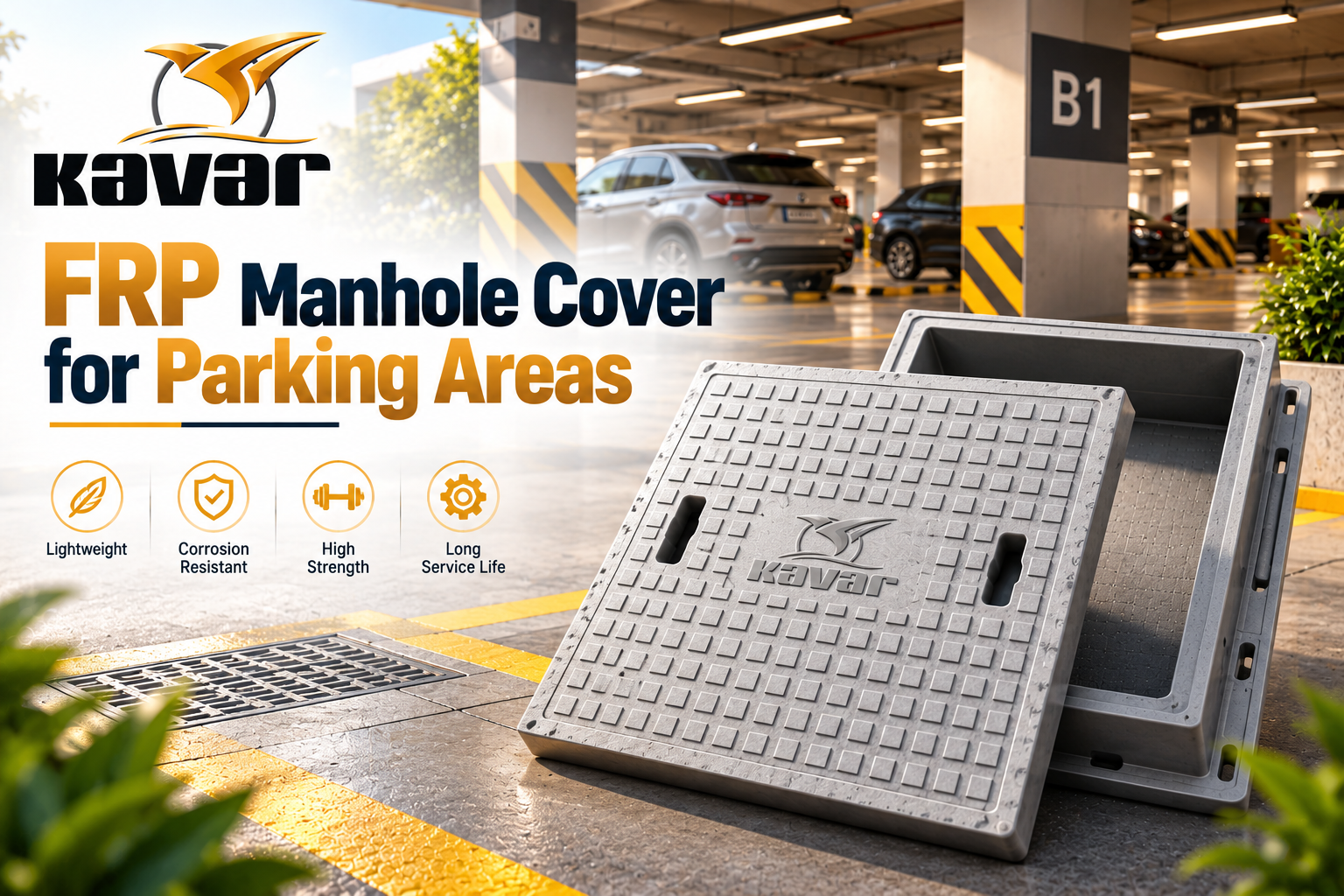
Planning an FRP Manhole Cover for a Parking Area?
KavarIndia offers FRP Manhole Cover for Parking Areas applications where access chambers need a corrosion-resistant composite cover selected around real site conditions. For parking projects, the important questions are not only cover size: buyers should also confirm the wheel path, required load class, chamber opening, frame or rebate support, surface grip, and any locking requirement.
- FRP composite construction for access chambers
- Non-metallic construction with low scrap resale interest
- Corrosion-resistant material for wet parking environments
- Lower handling weight than many traditional heavy covers
- Suitable for selected parking, utility and access-chamber locations
- Size, traffic zone and project specification checked before selection
Table of Contents
Parking areas look simple from the surface, but the access covers inside them deal with a very specific mix of loads: slow-moving cars, turning tyres, repeated wheel passes, water, dust, cleaning chemicals and occasional service vehicles. A FRP Manhole Cover for Parking Areas can be a practical option when the cover is selected for the actual chamber and traffic location rather than chosen only by its outside dimensions.
Quick answer: an FRP manhole cover is suitable for a parking area only when the specific cover-and-frame system is designed for the required installation zone and load class. The safest buying process is to identify where vehicle wheels can travel, measure the chamber correctly, then match the product to the project specification.
About FRP Manhole Covers for Parking Areas
FRP (Fiber Reinforced Plastic) is a composite material in which reinforcing fibres are combined with a resin matrix. In access-cover applications, the material can provide corrosion resistance and a useful strength-to-weight ratio. That matters in parking areas because covers may need to be opened for inspection while still coping with the loading conditions specified for the site.
FRP should not be treated as one universal grade or one universal load rating. Cover geometry, internal reinforcement, frame support, material formulation and manufacturing design all affect performance. For that reason, a buyer should ask for the load documentation applicable to the exact cover size and model being considered rather than relying on a generic statement such as “heavy duty.”
Sticky Q&A: What matters most in a parking area?
Answer: first identify whether tyres can pass directly over the cover. After that, confirm the required load class, clear opening, frame or rebate dimensions, seating depth, surface texture and project standard. This short checklist prevents many wrong selections.
Parking Area Applications
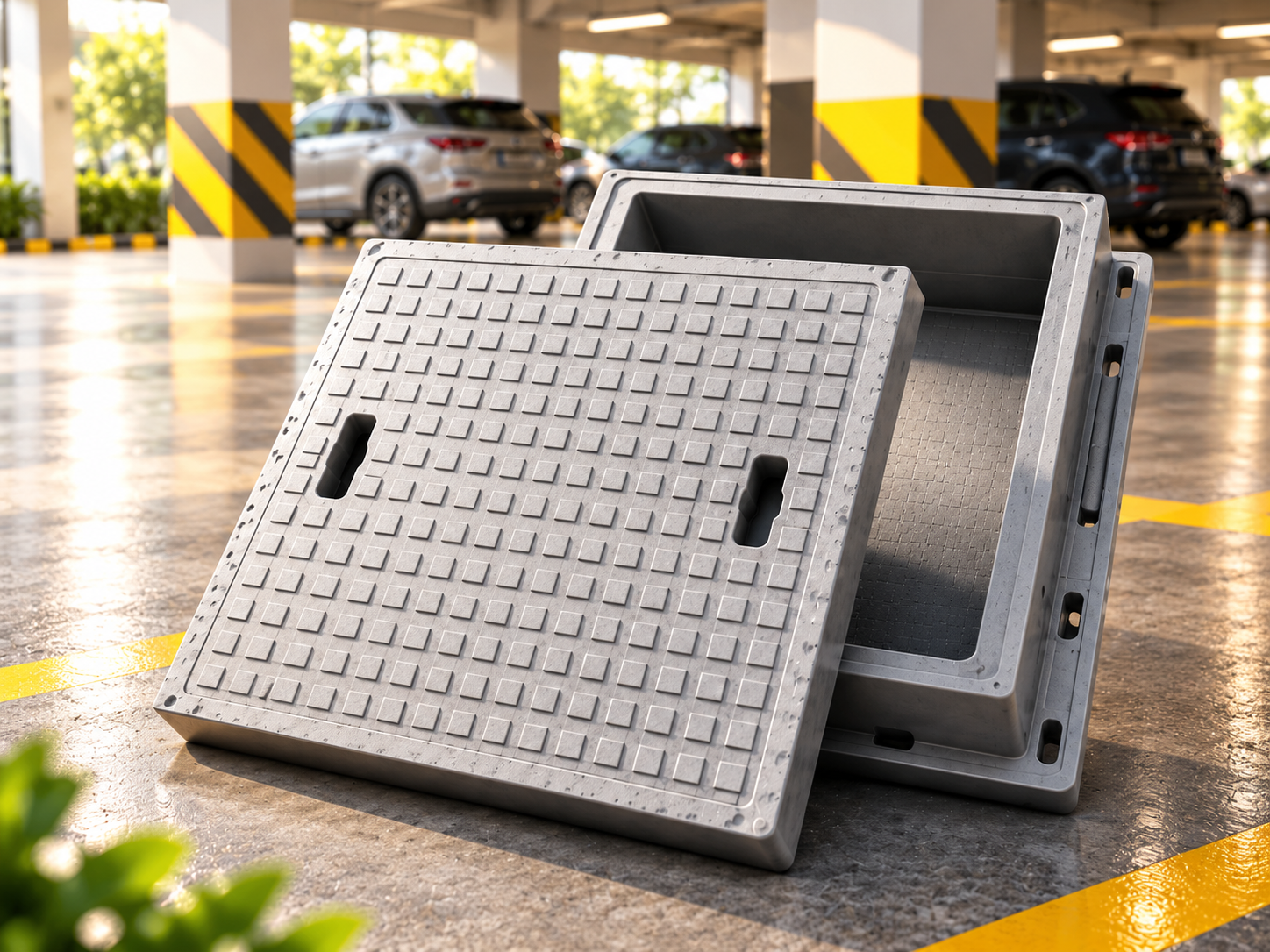
An FRP Manhole Cover for Parking Areas may be considered for access chambers located in or around:
- Apartment & Housing Parking: utility, drainage or inspection chambers in basement, podium and open residential parking areas.
- Commercial Car Parks: malls, offices, hotels and mixed-use developments where covers may sit in pedestrian zones or vehicle circulation areas.
- Institutional Parking: hospitals, schools, campuses and public facilities with regular car movement and routine maintenance access.
- Industrial & Warehouse Parking: parking or access zones near facilities, provided the selected cover is matched to the actual vehicle type and project load requirement.
A useful distinction: a manhole cover closes an access opening, while a drain grating or drain cover is intended to admit surface water. They are not automatically interchangeable. If the chamber needs water inflow, ventilation or a sealed top, that requirement should be stated before the cover is selected.
Key Features & Selection Factors
For parking applications, buyers should evaluate the complete cover-and-frame arrangement rather than selecting a product from material name alone.
1. Traffic Zone & Load Class
The load requirement changes with installation position. Where EN 124 is the project reference, car parks and parking decks can fall within B125 in applicable locations, while carriageways and parking areas used by road vehicles can require D400. This does not mean every parking cover should automatically be B125 or D400; the project engineer, tender specification and exact wheel path should determine the required class.
2. Correct Clear Opening & Frame Support
Measure the chamber's clear opening separately from the overall cover size. Also record the frame or rebate dimensions and available seating depth. A cover that is “roughly the same size” can rock, sit proud of the finished floor or transfer load incorrectly if the support detail is wrong.
3. Corrosion Resistance in Wet Areas
FRP does not rust like ferrous metal, which can be useful in basements, wash-down zones and outdoor parking exposed to rainwater. Chemical resistance, however, depends on the resin system and exposure, so unusual fuels, solvents or industrial chemicals should be disclosed during selection.
4. Surface Grip
A textured or anti-slip top should be considered where tyres or pedestrians cross the cover, especially on ramps, wash areas or open parking exposed to rain. Do not judge grip only by how the pattern looks in a catalogue; use the project requirement where a slip-resistance value or test is specified.
5. Handling, Access & Security
Composite covers are often lighter than comparable traditional metal or concrete covers, which can help during inspection and maintenance. At the same time, buyers should check lifting points, locking or anti-lift requirements, frame fit and how frequently the chamber will be opened.
KavarIndia Technical Selection Approach
KavarIndia can use the project details supplied by the buyer to narrow down the appropriate FRP Manhole Cover for Parking Areas. The most useful enquiry is not simply “send price for 600 × 600.” A better enquiry explains where that opening is located and what can travel over it.
KavarIndia technical team note: “For a parking-area manhole cover, do not start with the cover size alone. First identify where vehicle wheels can actually pass, then check the required load class and the chamber rebate. That usually prevents the most common selection mistakes.”
- Share the opening: clear opening, overall required size, chamber shape and seating depth.
- Share the traffic condition: pedestrian-only edge, car parking bay, circulation lane, ramp or service-vehicle zone.
- Share the specification: required load class, referenced standard or consultant drawing if one is already defined.
- Share practical requirements: quantity, surface finish, locking need, access frequency and any unusual chemical exposure.
How to Choose the Right FRP Manhole Cover
Use this buyer checklist before requesting a quotation or approving a cover for a parking project:
- Map the Wheel Path: confirm whether vehicle tyres can cross the cover or whether it sits in a protected pedestrian/landscape edge.
- Measure the Opening Properly: record the clear opening, frame/rebate dimensions and seating depth; do not send only the old cover's outside measurement.
- Confirm the Required Load Class: use the project drawing, consultant requirement or applicable standard. Avoid converting a marketing “ton” figure directly into a standard class without supporting test information.
- Check the Complete Frame: load performance depends on correct support and installation, not only on the lid itself.
- Specify Surface Conditions: note ramps, wet areas, wash-down locations or places used by pedestrians so surface grip can be considered.
- Ask for Model-Specific Documentation: request load/test information for the actual size and configuration proposed for the project.
Common Buying Mistakes to Avoid
Three mistakes appear again and again: choosing by size alone, assuming every FRP cover with the word “heavy duty” is suitable for vehicle traffic, and ignoring the condition of the supporting frame. Another common issue is ordering a solid manhole lid where the site actually requires a drainage grating. A short site check before ordering is usually cheaper than correcting a wrong cover later.
Practical Specification Checklist
Before finalising an enquiry, keep these details together: clear opening, cover shape, frame/rebate size, seating depth, installation zone, expected vehicle type, required load class or standard, surface requirement, locking requirement and quantity. Photographs of the chamber and its surrounding floor can also make the discussion clearer, especially on replacement jobs.
Frequently Asked Questions
Conclusion & Call to Action
A parking-area access cover should be selected from site conditions, not from a generic product label. If you are evaluating an FRP Manhole Cover for Parking Areas, begin with the wheel path, chamber opening and required load class, then check the frame support, surface condition and maintenance access. This produces a clearer specification and makes supplier comparison much easier.
Need an FRP Manhole Cover for a Parking Project?
Send KavarIndia the clear opening, frame or rebate size, installation location, expected vehicle type, required load class or project specification, quantity and a site photo if available. That gives the technical discussion a useful starting point and helps avoid quoting the wrong cover.
Enquire Now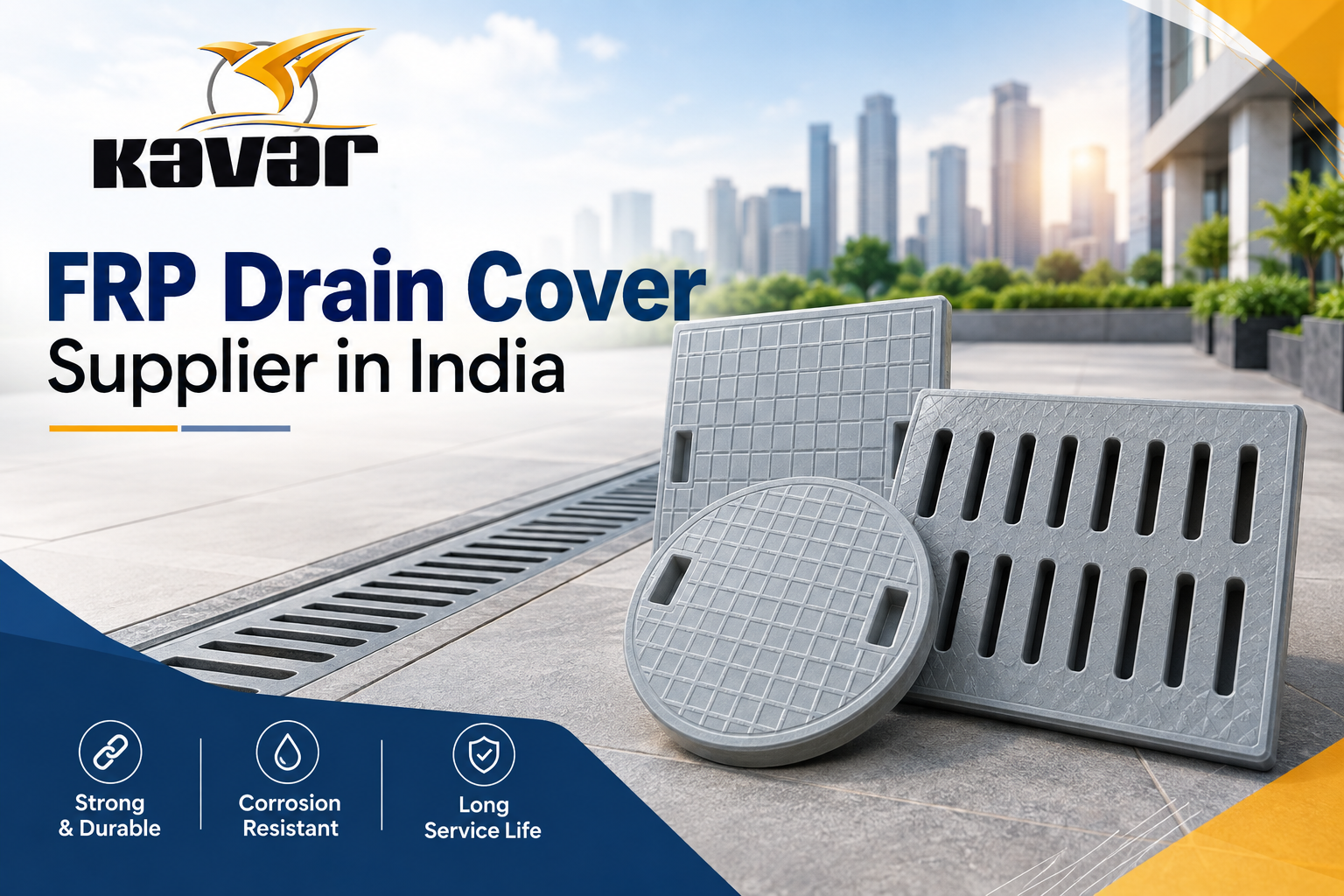
KavarIndia supplies FRP composite access products for infrastructure applications, including FRP Manhole Cover for Parking Areas enquiries. For parking projects, buyers should share the chamber dimensions, exact installation zone, expected vehicle movement and any specified load class so the cover can be discussed against real site requirements rather than size alone.