FRP Manhole Cover for Drainage Systems: Selection, Loads and Installation Guide
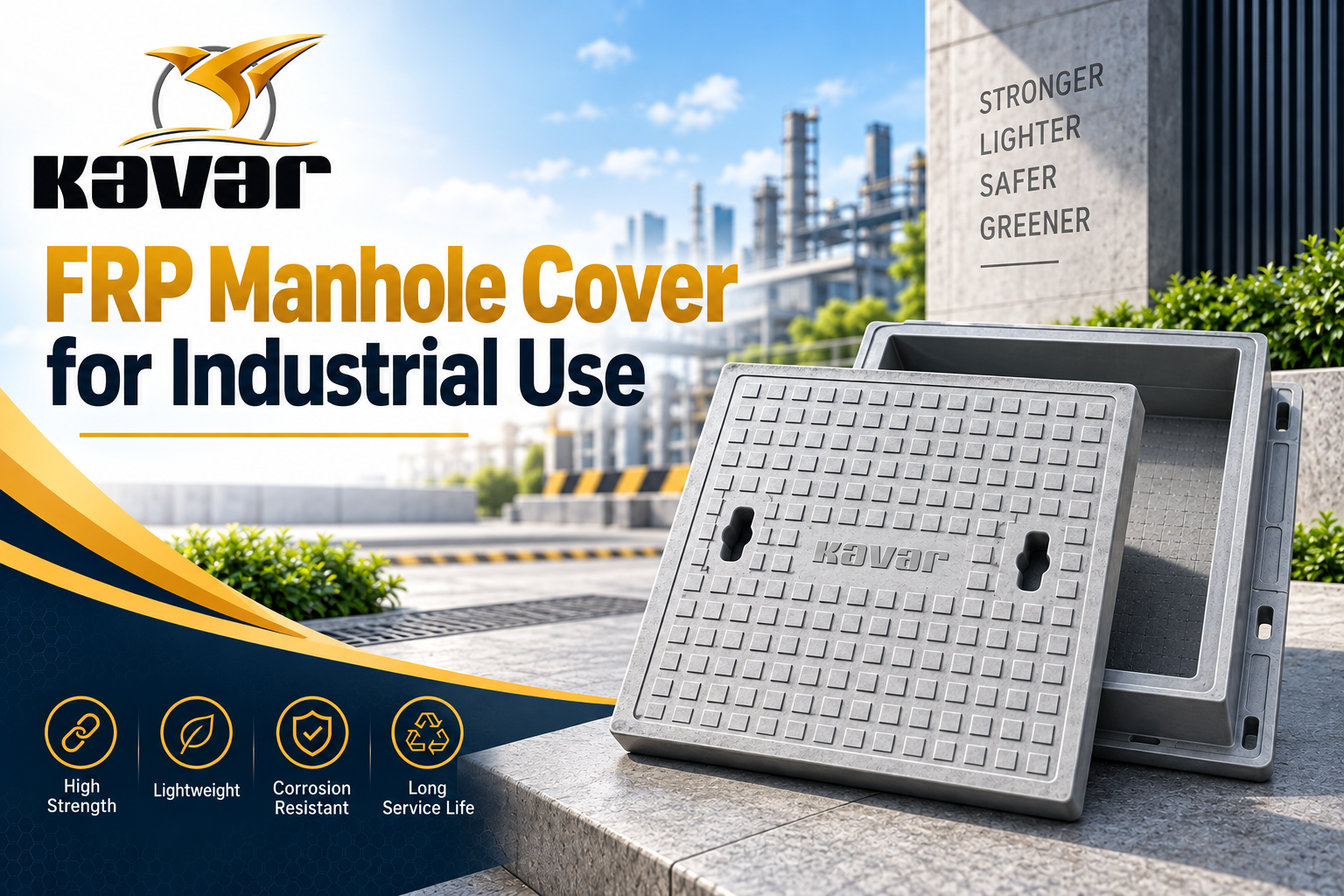
FRP Manhole Cover for Drainage Systems: What Buyers Should Check
For drainage systems, a cover must do more than close an opening. The right FRP Manhole Cover for Drainage Systems should match the clear chamber opening, expected pedestrian or vehicle loads, flow access requirements, maintenance frequency, and the condition of its supporting frame. KavarIndia offers composite cover options for drainage access points where moisture resistance and manageable handling can be useful. Suitability depends on the specific cover, frame and project requirements.
- Load Selection: Match the cover and frame to the specified traffic duty
- Drainage Access: Keep inspection and cleaning access practical
- Moisture Resistance: Composite material does not rust like iron
- Handling: Review lifting method for regular drain inspections
- Surface & Exposure: Consider wet-surface grip, UV and chemical exposure
- Project Matching: Check clear opening, seating, drainage duty and frame
Table of Contents
- Where FRP Manhole Covers Fit Drainage Systems
- Key Features of FRP Covers for Drainage Chambers
- How to Choose the Right Drainage Cover Load Class
- Applications in Stormwater, Sewer and Site Drainage
- FRP vs. Cast Iron vs. Concrete Drainage Covers
- Drainage FRP Manhole Cover Buying Guide
- Frequently Asked Questions (FAQs)
An FRP Manhole Cover for Drainage Systems is a fibre-reinforced polymer composite lid used to close an inspection or access chamber connected to a stormwater drain, wastewater line or site drainage network. It allows maintenance access while helping protect the opening. A garden pathway, paved parking area and road carriageway do not have the same loading requirement.
Start with five site facts: clear opening dimensions, where the chamber sits, who or what passes over it, how often the drain is opened and whether water or wastewater may reach the cover. Many site mistakes begin with an unclear dimension on a drawing.
Where FRP Manhole Covers Fit in Drainage Networks
FRP means fibre-reinforced polymer: reinforcing fibres are embedded in a resin matrix to form a composite. A drainage manhole cover is a removable access component, not a substitute for the chamber structure beneath it. Its load rating depends on the manufactured cover-and-frame assembly and applicable testing, not the material name alone.
FRP is considered for rainwater collection chambers, roadside drainage inspection points, sewer inspection chambers and landscaped utility areas. It does not rust like cast iron, but the selected resin, sealing detail and frame still need to suit the water, cleaning chemicals and exposure at the site.
Sticky Q&A: Can any FRP cover go on a road drain? No. A road location requires an appropriately tested load class, compatible frame, reliable seating and correct installation; a pedestrian cover is not enough.
Key Features of FRP Covers for Drainage Chambers
For a drainage project, check how the material, opening and assembly will behave during rain, cleaning and repeated access. Five points matter:
1. Moisture and Corrosion Behaviour
FRP itself does not develop iron rust. That is useful around wet chambers and outdoor stormwater drains, although frames, fittings and any aggressive wastewater exposure should be reviewed separately.
2. Lower Metal Scrap Attraction
As a non-metallic composite, FRP generally has less attraction as scrap metal than cast iron. It is still sensible to assess security or locking needs at public access points.
3. Practical Inspection Access
Some FRP covers are lighter than comparable traditional alternatives. For a drain that is opened frequently to remove silt, check the actual cover weight, lifting provision and safe removal method instead of assuming every cover is easy to lift.
4. Cover and Frame Seating
A suitable cover should sit evenly on its matching frame without rocking. For drainage chambers, uneven bedding, chipped edges or an incorrect frame can create a hazard even when the cover material itself is sound.
5. Slip Resistance and Water Exposure
Ask about surface texture where pedestrians may step on a wet lid, along with outdoor exposure, water ingress, sealing and whether the chamber needs ventilation. A cover over a drain is not automatically watertight.
“For a drainage chamber, the first question should be where the cover will sit and who will travel over it. The opening size and frame matter just as much as the cover itself.” — KavarIndia Technical Team (suggested wording; confirm with the team before publishing)
How to Choose the Right Drainage Cover Load Class
Do not infer strength from a cover’s thickness or a “heavy-duty” sales label. If the project uses EN 124 load-class terminology (for example A15, B125, C250, D400), request documented evidence that the specific product and frame meet the applicable specification. Those labels are not interchangeable with an unsupported tonnage claim.
- Footpaths and Gardens: Access points with pedestrian use; verify the specified class and site position.
- Parking and Driveways: Check vehicle use and the location of the chamber relative to tyre paths.
- Kerbside Drainage: Consider wheel proximity, edge loading and the drainage channel arrangement.
- Road Carriageways: Specify the required traffic-rated assembly and installation details from the project engineer.
Sticky Q&A: Does D400 mean every FRP lid works on a road? No. A class designation must apply to the specific tested assembly and appropriate installation; confirm the relevant standard, supporting documents and intended position.
Applications in Stormwater, Sewer and Site Drainage
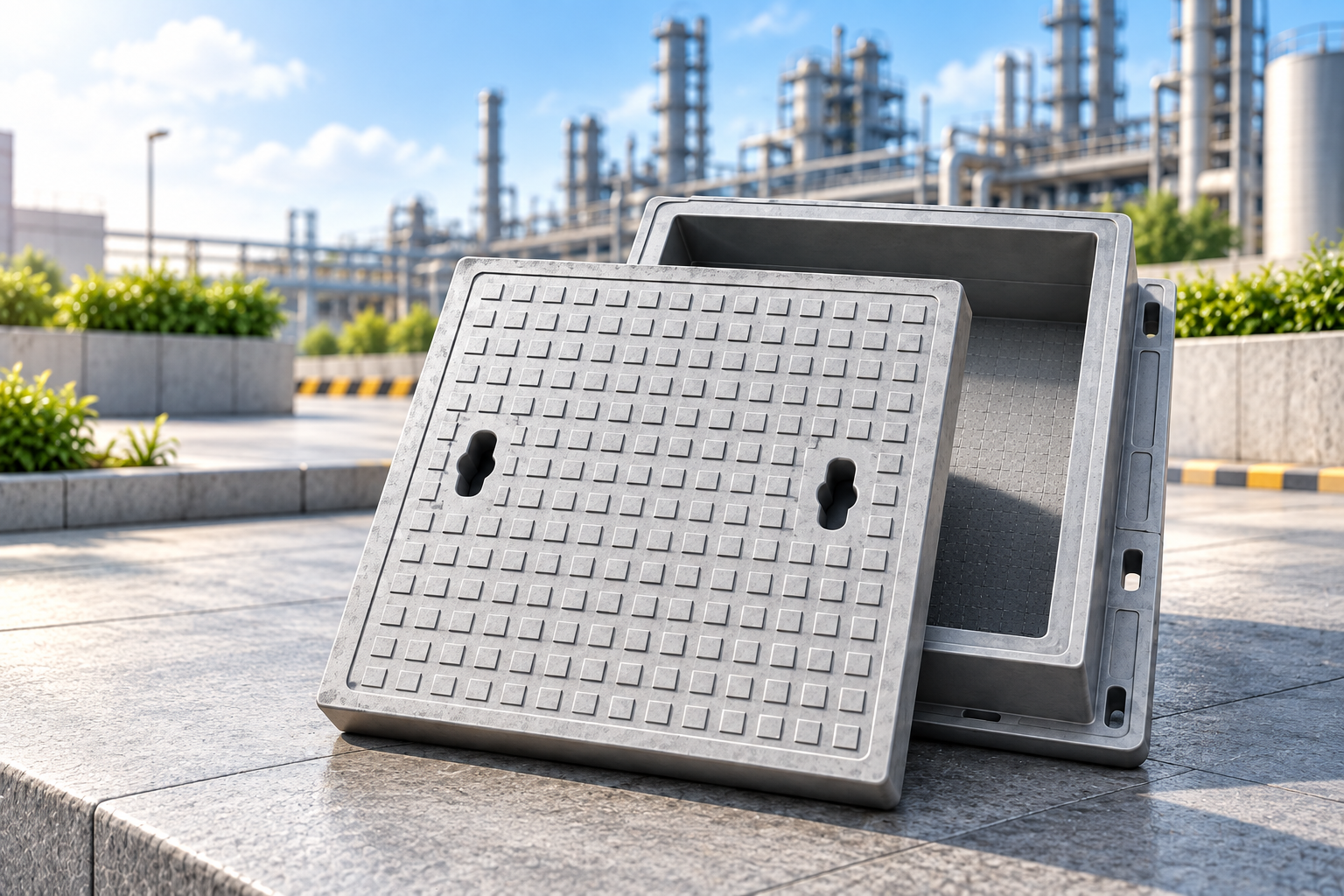
A suitable FRP Manhole Cover for Drainage Systems may be used at these access points when the required loading, dimensions and exposure have been checked:
- Stormwater Networks: Rainwater inspection chambers along building perimeters, paved sites and internal drains.
- Sewer Inspection Chambers: Access for inspection and cleaning; check wastewater gases, chemical exposure and any sealing requirements.
- STP / ETP Drainage: Access points at treatment facilities when material compatibility is confirmed.
- Residential and Commercial Sites: Drainage chambers in walkways, landscapes and parking areas, specified according to traffic.
- Roadside and Kerbside Access: Inspection covers near drains where wheel loading and frame bedding matter.
- Institutional and Campus Drainage: Courtyards, service paths and external drain runs where maintenance access is needed.
FRP vs. Cast Iron vs. Concrete Drainage Covers
| Feature / Parameter | FRP Composite Cover | Cast Iron (CI / DI) | Concrete (SFRC) |
|---|---|---|---|
| Metal Scrap Attraction | Limited metal-scrap value | Has metal scrap value | No Scrap Value |
| Wet-Environment Behaviour | Does not rust; confirm wastewater compatibility | Can corrode without suitable protection | May deteriorate if poorly designed or exposed |
| Access and Handling | Depends on model and actual weight | Weight varies by model and class | Can be heavy; edges may chip |
| Lifespan | Service life depends on design, loading and environment | Service life depends on corrosion and loading | Service life depends on mix, support and exposure |
| Drainage Installation | Frame fit and seating must be checked | Appropriate frame and bedding required | Frame and edge support need checking |
Drainage FRP Manhole Cover Buying Guide in India
When requesting a drainage cover quotation, pass along a few details from the actual site rather than only a nominal size:
- Opening and Frame: Measure the clear chamber opening and frame outside dimension separately; specify round or square.
- Placement and Loading: State whether the cover is in a garden, footpath, parking bay, kerb or trafficked road.
- Drainage Medium: Clarify whether the chamber handles rainwater, domestic sewage or treated/industrial wastewater.
- Cleaning Access: Explain whether the lid will be opened for regular silt removal or infrequent inspection.
- Frame and Finish: Check seating depth, matching frame, anti-slip finish, locking and any sealing requirement.
- Drawings and Standards: Supply the project schedule and required test/load-class documents, if specified.
Common Buying Mistakes to Avoid
- Confusing clear opening size with outside cover or frame dimensions.
- Buying by thickness without checking load-test documents.
- Using a pedestrian-rated cover in a driveway or road.
- Setting a sound lid on an uneven or poorly supported frame.
- Assuming all FRP is compatible with sewage, effluent or cleaning chemicals.
- Forgetting lifting access or anti-slip needs on a frequently cleaned drain.
Sticky Q&A: What details should go into an enquiry? Send the clear opening, shape, quantity, drain type, location, traffic condition and frame requirement. A site photo with a measuring tape often clears up confusion faster than a verbal size.
Frequently Asked Questions (FAQs)
Conclusion: Specify the Drainage Chamber, Not Just the Lid
An FRP Manhole Cover for Drainage Systems should suit the chamber it closes and the surface above it. Good selection starts with an accurate opening measurement, the actual traffic position, matching frame and drainage environment. Share those facts with KavarIndia before requesting a final specification or quotation.
Discuss Your FRP Drainage Cover Requirement with KavarIndia
Share your drain chamber size, site location, expected loading, quantity and drawing or photograph with KavarIndia to discuss suitable cover-and-frame options.
Enquire for FRP Drainage Covers
KavarIndia supplies FRP manhole and chamber covers for drainage and infrastructure applications. Buyers can share chamber dimensions, the drain type, traffic position and frame requirement to discuss a suitable configuration.